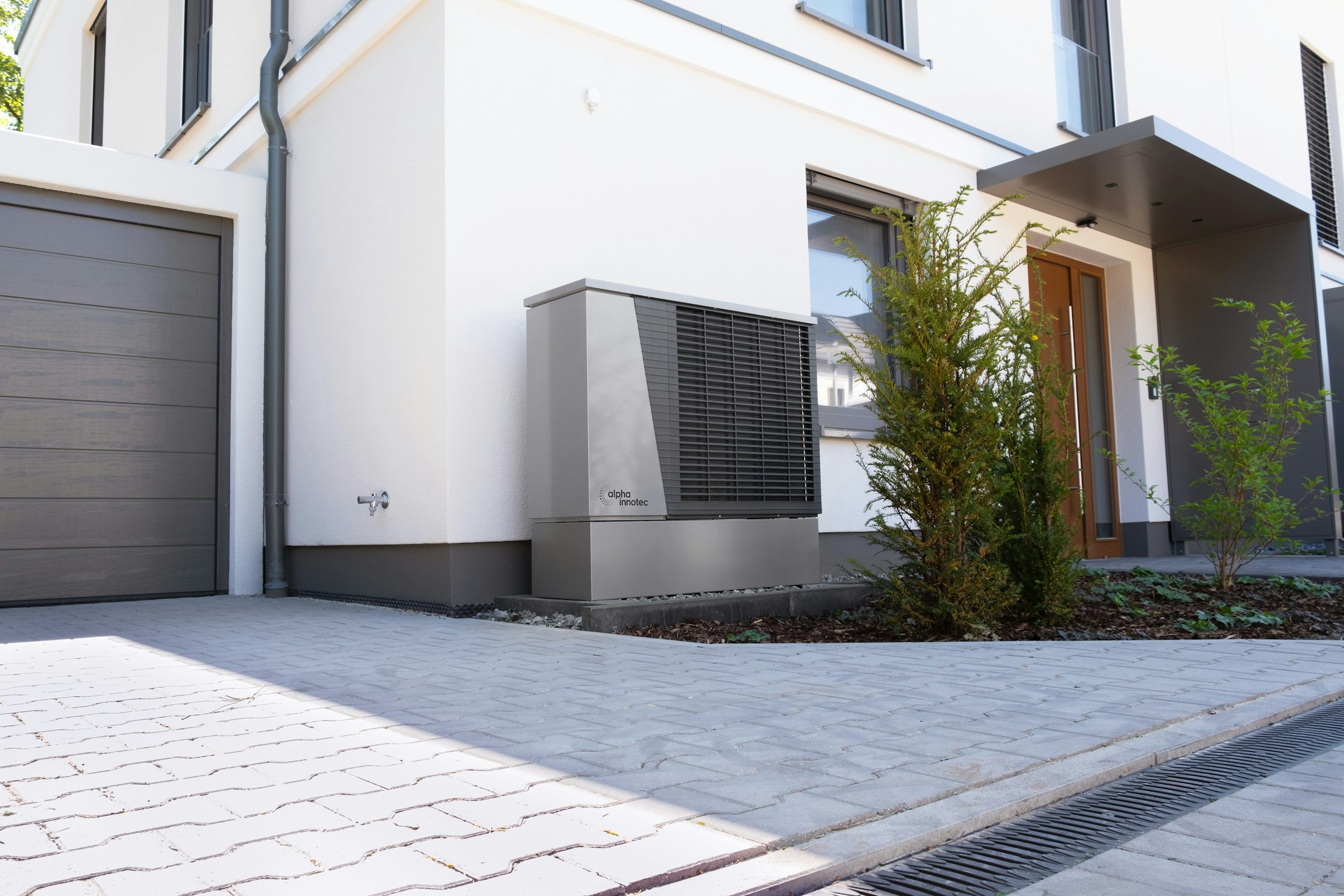
How it works
Cold air in, warm water out, and one number that decides everything.
A heat pump moves heat rather than making it, which is why it can deliver three or four units of warmth per unit of electricity. How many depends almost entirely on how hot you ask the water to be.
01 — Your house
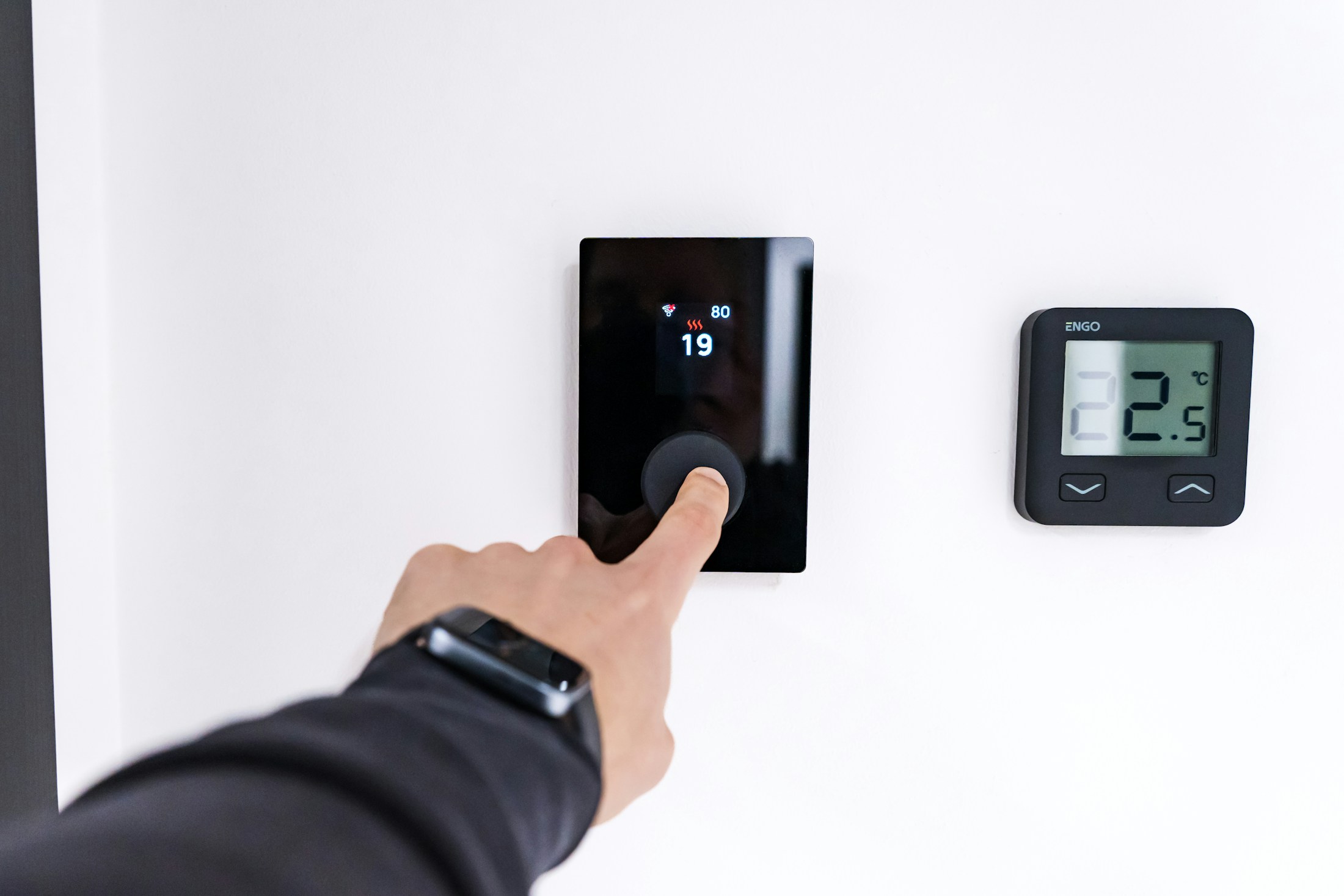
02 — Flow temperature
Efficiency & running cost
1930s semi · 45 °C flowHeat pump
£1,104
per year, at COP 3.3
Gas boiler
£1,120
same house, 85% efficient
−£16/yr cheaper than gas at this flow temperature.
Why the radiators change
A radiator at 45 °C gives out about half what it gives at 70 °C.
70 °C
What a gas boiler runs at. Your radiators were sized for this, which is why they are small.
45 °C
A realistic heat-pump flow temperature in an insulated house. Each radiator now needs to be roughly twice the size.
35 °C
Underfloor, or very large radiators in a well-insulated house. The cheapest heat you can buy — and rarely achievable in a Victorian terrace.
The process
Five steps, and two of them are not us.
Desktop check — free
Age, wall type, floor area, current fuel, EPC. Ten minutes on the phone tells us whether a survey is worth your money, and about one enquiry in five is told not yet.
Heat loss survey — £280
Room by room, refunded against the install. You get the calculation itself, not a summary: every room, its heat loss, its radiator size, and the flow temperature that follows.
Design & DNO
System design, cylinder location, noise assessment against MCS 020, and the G99 or G98 notification to your network operator. Two to six weeks, and outside our control.
Install — 3 to 5 days
Two engineers. Heating off for one day, hot water off for a few hours. We work to a written programme and we tell you the day the scaffolding arrives.
Commissioning & handover
Weather compensation curve set with you in the room, MCS certificate issued, grant applied to the invoice, and a follow-up visit six weeks later to retune the curve for how you actually live.